China’s ceramic ornaments combine centuries-old craft with controlled modern production. Their durability depends on clay selection, firing temperature, glaze chemistry, and careful finishing.
Industry standards clarify the science. ISO 10545-3 measures ceramic water absorption, while ASTM C373 uses similar testing principles. These standards target tiles, not ornaments, but they provide useful technical guidance. Lower absorption usually means fewer pores, reduced moisture entry, and better resistance to staining. The International Energy Agency reports that ceramics manufacturing remains energy-intensive, with firing conditions strongly affecting material performance. In practice, a dense ornament should feel solid, show an even glaze, and resist powdery edges. Small details matter.
This guide examines China’s top ten ceramic ornaments through those measurable qualities. It considers kiln control, body density, glaze adhesion, wall thickness, packaging, and surface maintenance. Market research from Grand View Research identifies ceramics as a major global materials sector, although broad market figures do not automatically prove ornament quality. That limitation deserves attention. A famous design can still contain weak joints or hidden bubbles. So, what makes ceramic ornaments durable for long-term display? The answer involves both material engineering and daily handling. A stable shelf, moderate humidity, and soft cleaning cloth can protect years of craftsmanship. Even excellent ceramics are not indestructible. Their weakest point may be an exposed corner, a thin handle, or careless packaging during transport.
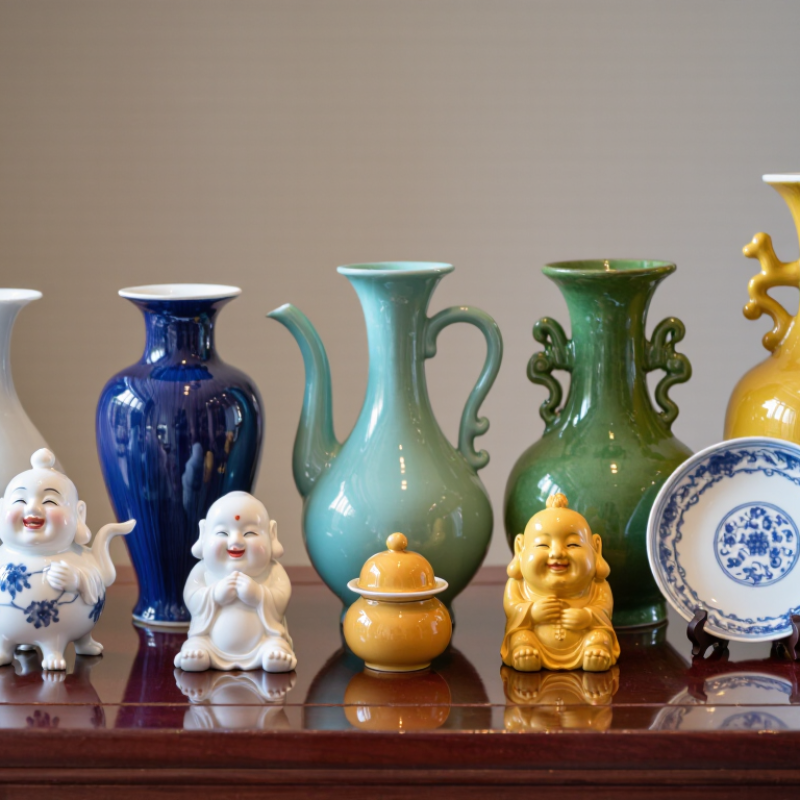
China’s top ten ceramic ornaments are best viewed as a practical selection, not an official ranking. The list includes a blue-and-white porcelain vase, a celadon figurine, a painted floral jar, and a carved porcelain plate. It also features a terracotta horse, a ceramic fish sculpture, a guardian lion, a miniature pagoda, a pierced lantern, and a decorative tile panel. Each form reflects a different Chinese tradition, from quiet jade-like glazes to lively hand-painted scenes.
Durability begins with the clay body and firing temperature. High-fired porcelain usually resists moisture and surface wear better than low-fired earthenware. Still, it can chip sharply when dropped. A celadon figurine may survive years on a shelf, but its thin projecting details remain vulnerable. Check the base for a stable foot ring, fine cracks, and uneven glaze pooling. These small signs reveal more than decoration alone. A heavy terracotta horse should feel balanced, while a hollow lantern needs careful handling around its openings.
In my view, the blue-and-white vase and porcelain plate deserve the highest practical positions. Their dense bodies and broad surfaces are easier to inspect and maintain. The ranking remains subjective. Some collectors may value the imperfect brushwork of a fish sculpture more than flawless symmetry. That preference is reasonable, because handmade character can include small variations, soft edges, and tiny glaze marks that factory-perfect pieces often lack.
China’s top ceramic ornaments are made durable through controlled material preparation, careful forming, and high-temperature firing. Manufacturers usually blend kaolin, feldspar, quartz, and other minerals. The mixture is filtered to remove stones and air pockets. It is then pressed, cast, or shaped by hand.
Drying is a quiet but critical stage. Moisture must leave slowly, or fine cracks may appear. After drying, artisans apply glaze with a thin, even coating. The European Commission’s Ceramic Manufacturing Industry BREF reports firing temperatures commonly ranging from about 1,000°C to 1,400°C, depending on the ceramic body and glaze. At these temperatures, particles bond and create a denser structure. ISO 10545-3 also identifies water absorption as an important indicator of ceramic quality. Lower absorption usually suggests better vitrification. Still, an ornament is not automatically strong. A fragile design can fail at its narrowest point.
After firing, quality teams inspect color, shape, surface defects, and dimensional changes. Some pieces receive a second firing for decoration. Controlled cooling matters too. Sudden temperature changes can create hidden stress. In real workshops, small imperfections remain possible. A tiny glaze bubble may not affect appearance today, but it can weaken the surface over time. Better production combines documented testing with experienced human inspection.
China’s top 10 ceramic ornaments become durable through careful material selection and thoughtful design. High-fired porcelain and stoneware are strong choices because intense kiln heat creates a dense, low-absorption body. This matters in humid rooms and outdoor settings. A compact clay structure resists small impacts better than soft, porous earthenware.
Glaze quality also plays an important role. A well-fused glaze seals the surface and reduces moisture entry. For outdoor ornaments, frost-resistant clay and glaze help limit cracking during freeze-and-thaw cycles. Sudden temperature changes still create stress. Rounded edges are safer than sharp corners, especially on small animal figures or floral shapes. Thick, even walls provide strength without making the ornament unnecessarily heavy.
Design balance is often overlooked. A wide base prevents tipping, while a lower center of gravity protects delicate details. Reinforced stems, smooth joins, and carefully supported wings can reduce breakage. Hollow forms need consistent wall thickness; uneven areas may crack during firing. A glossy finish looks attractive, but shine alone does not prove durability. Small firing marks can appear even on reliable pieces, and they deserve inspection rather than automatic rejection. Check the base for wobbling, hairline cracks, and rough glaze pooling. No ceramic ornament is indestructible. Better materials reduce risk, while sensible handling preserves the design.
Ceramic ornaments from China become durable through controlled firing, not decoration alone. In the kiln, heat removes moisture and organic matter from the clay body. Higher temperatures can create vitrification, making the material denser and less absorbent. The exact temperature depends on the clay, shape, and intended finish. A small bird with thin wings needs different control from a solid figurine.
Glazing adds a protective, glass-like surface. It helps resist water, dust, stains, and light surface scratches. A well-matched glaze also seals tiny pores that could hold moisture. However, glaze is not a magic shield. If the glaze and clay expand at different rates, fine cracks called crazing may appear. Poor cooling can also cause blistering, pinholes, or uneven color. These defects may look attractive, but they can weaken the surface over time.
Experienced makers inspect the foot, edges, and narrow projections after firing. They tap the ornament gently and check for hollow, unstable sounds. A smooth glaze should feel continuous, without sharp flakes or exposed clay. Hand-shaped pieces naturally show small variations. That is part of their character, though it deserves honest inspection. Even a beautifully fired ornament can break when dropped, especially around raised flowers, handles, or delicate animal ears.
| Rank | Ceramic Ornament Type | Typical Ceramic Body | Typical Firing Range | Common Glazing Method | How Firing Improves Durability | How Glazing Protects the Surface | Relative Durability |
|---|---|---|---|---|---|---|---|
| 1 | Porcelain Figurines | Kaolin-rich porcelain clay | 1,200–1,400°C | Transparent or colored high-fire glaze | High-temperature firing vitrifies the body, reducing porosity and water absorption. | The smooth glass-like coating limits staining, dust penetration, and surface abrasion. | Very High |
| 2 | Stoneware Animal Figures | Stoneware clay with silica and fluxes | 1,200–1,300°C | Matte, satin, or glossy stoneware glaze | Dense firing creates a strong, non-porous body that withstands ordinary handling. | Glaze seals pores and helps protect painted details from moisture and dirt. | Very High |
| 3 | Celadon Vases | Fine stoneware or porcelain | 1,200–1,300°C | High-fire translucent green celadon glaze | The body becomes dense and mechanically stable after high-temperature sintering. | The glaze forms a continuous protective layer and enhances resistance to liquid absorption. | High |
| 4 | Blue-and-White Decorative Plates | Porcelain or fine stoneware | 1,200–1,400°C | Underglaze cobalt decoration with clear glaze | High firing strengthens the plate and bonds the mineral body into a dense ceramic structure. | The clear glaze covers the decoration, reducing fading, scratching, and moisture exposure. | High |
| 5 | Raku-Style Sculptures | Open-textured stoneware clay | 900–1,000°C | Smoke-marked, crackle, or metallic glaze | Firing hardens the clay, but rapid cooling may leave a more porous and less impact-resistant body. | Glaze protects selected areas, although crackle patterns and exposed clay can retain porosity. | Moderate |
| 6 | Terracotta Wall Figures | Iron-rich earthenware clay | 950–1,100°C | Clear, colored, or partial glaze | Firing converts soft clay into a rigid ceramic, but the earthenware body remains relatively porous. | A complete glaze reduces water absorption and helps prevent surface dusting and staining. | Moderate |
| 7 | Miniature Tea-Pet Sculptures | Unglazed or glazed Yixing-style stoneware | 1,100–1,200°C | Often unglazed; sometimes finished with a thin glaze | Stoneware firing provides a hard, durable body suitable for repeated decorative handling. | Where applied, glaze reduces surface porosity; unglazed surfaces require more careful cleaning. | High |
| 8 | Carved Ceramic Lanterns | Stoneware or porcelain | 1,150–1,350°C | Transparent, translucent, or satin glaze | Controlled firing stabilizes thin carved walls and reduces residual moisture in the body. | Glaze protects the carved surface from fingerprints, humidity, and light staining. | High |
| 9 | Relief Wall Plaques | Earthenware or stoneware clay | 1,000–1,250°C | Brushed, sprayed, or dipped glaze | Firing increases hardness and fixes the relief design permanently in the ceramic body. | Glaze helps seal the broad front surface and makes routine dust removal easier. | Moderate to High |
| 10 | Ceramic Hanging Bells | Stoneware or earthenware clay | 1,000–1,250°C | Glossy, satin, or partial glaze | Firing gives the bell a rigid resonant structure and improves resistance to normal indoor use. | Glaze protects decorative colors and limits moisture penetration around the exterior. | Moderate to High |
Durable ceramic ornaments still need careful maintenance.
Their fired surfaces resist daily wear, but glaze can crack under sudden temperature changes. Keep ornaments away from radiators, sunny windows, damp bathrooms, and vibrating shelves. A stable indoor shelf is safer than a narrow ledge.
Dust them weekly with a soft, dry brush or microfiber cloth. For greasy marks, use lukewarm water and a small amount of mild soap. Dampen the cloth, rather than soaking the ornament. Dry every surface immediately, especially around hollow bases and painted details. Never use abrasive powders, stiff brushes, or strong household chemicals. They may remove the finish slowly.
Tips: Handle each piece with two hands over a padded table. Check small edges every few months for chips or loose parts. Place felt or cork beneath the base to prevent scratches. Avoid stacking ornaments unless each layer has soft padding. If a piece feels unstable, move it before cleaning. I once used too much water on a hollow ornament, and moisture remained inside for days. That mistake changed my routine. Clean gently, inspect patiently, and remember that decorative coatings may be more fragile than the ceramic body. Temperature changes should be gradual, not sudden. Keep the display area free from clutter, so accidental knocks are less likely.
High-fired porcelain and stoneware are strong choices. Intense kiln heat creates a dense body with low moisture absorption. This structure handles humid rooms better than soft, porous earthenware. Still, no ceramic piece is indestructible.
A well-fused glaze seals the ceramic surface. It reduces moisture entry and helps protect painted details. For outdoor use, frost-resistant clay and glaze can reduce freeze-related cracking. Shine alone proves nothing.
Rounded edges resist damage better than sharp corners. Thick, even walls add strength without excessive weight. Reinforced stems, smooth joins, and supported wings protect delicate shapes. Uneven hollow walls may crack during firing.
Choose a wide base and a low center of gravity. These features reduce tipping and protect small details. A narrow ledge is risky. Place felt or cork beneath the base to prevent scratches.
A stable indoor shelf is usually safer. Keep ornaments away from radiators, sunny windows, damp bathrooms, and vibrating shelves. Gradual temperature changes are better than sudden ones. Avoid crowded displays.
Dust them weekly with a soft, dry brush or microfiber cloth. For greasy marks, use lukewarm water and mild soap. Dampen the cloth instead of soaking the ornament. Dry every surface immediately.
Avoid abrasive powders, stiff brushes, and strong household chemicals. They may slowly remove the glaze or decorative coating. Do not leave water inside hollow bases. I once used too much water, and moisture remained for days.
Check the base for wobbling, hairline cracks, rough glaze pooling, and small chips. Inspect delicate edges every few months. Small firing marks are not always serious, but they deserve careful review. Automatic rejection can be unfair.
China’s top 10 ceramic ornaments reflect a wide range of traditional and contemporary styles, including figurines, animals, vases, floral pieces, cultural symbols, and decorative sculptures. Their quality begins with carefully selected clay and mineral materials, which are shaped through molding, carving, or hand-building. Thoughtful designs, balanced structures, and appropriate wall thickness help reduce weak points and improve resistance to cracking during handling and display.
A controlled drying process removes excess moisture before high-temperature firing strengthens the ceramic body. Glazing adds a protective surface that helps resist stains, dust, moisture, and minor abrasion while also enhancing color and visual appeal. These factors explain what makes ceramic ornaments durable for long-term display: strong materials, precise craftsmanship, stable firing, and a well-applied glaze. To preserve their condition, ornaments should be kept away from sudden temperature changes, direct sunlight, excessive humidity, and unstable surfaces. Gentle dusting and careful handling can help maintain their finish and structural integrity for many years.

Anzi Decor