Small ceramic figurines can bring personality to a bookshelf, but a few thoughtful choices help them feel intentional rather than crowded. Their small scale makes spacing, color, and placement especially noticeable. A pale porcelain bird may disappear against a white wall, while a dark animal can anchor a lighter shelf. The goal is not to make every arrangement perfectly symmetrical. A little imbalance can feel more natural.
If you are wondering how to arrange small ceramic figurines on a bookshelf, start by noticing what is already there. Look at book heights, shelf depth, and the colors around each object. Grouping two or three figures can create a clear focal point, while leaving open space gives each piece room to be seen. Vary their heights with a sturdy stack of books, and keep delicate pieces away from edges where they could be knocked. Consider viewing the shelf from across the room, then adjust anything that feels hidden or crowded. It may take a couple of tries. That is normal.
The tips ahead offer practical ways to balance figurines with books, plants, and other decor without making the shelf feel staged. They also cover simple care and placement choices that help protect small ceramic pieces. Use them as a starting point, not a strict formula. Your collection, shelf, and taste should guide the final arrangement.
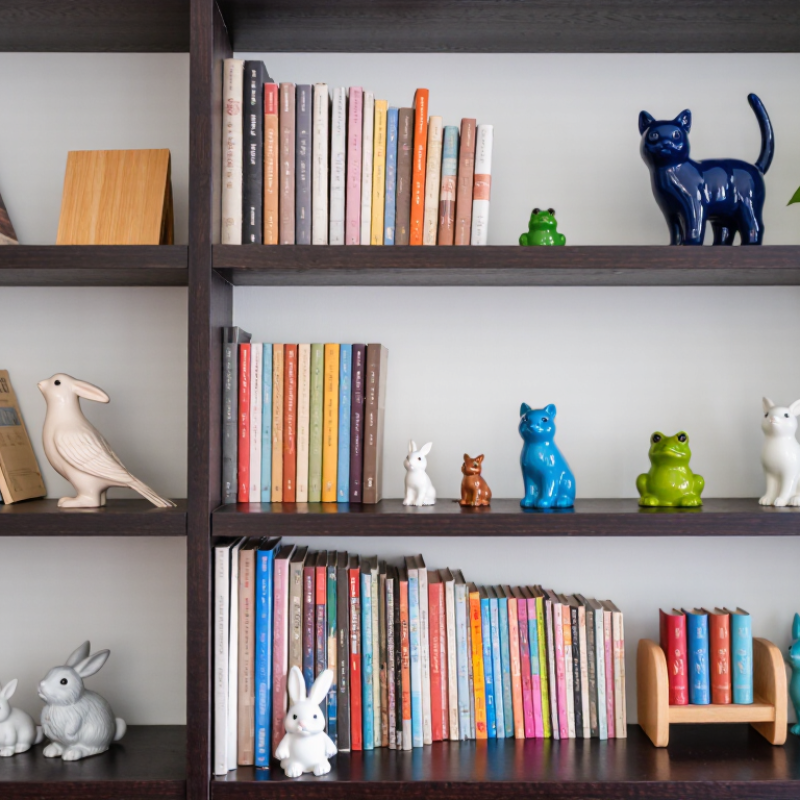
Before arranging anything, measure the shelf’s usable width, depth, and height. Include the space beneath the shelf above it; a tall figure can look cramped even when it technically fits. I once judged depth by eye and placed a piece too close to the edge. It looked unstable. Leave a little breathing room, and check that doors, books, or nearby objects will not bump the display. A ruler helps. So does a quick paper outline taped to the shelf.
Next, take stock of the figurines as a group. Note their heights, base sizes, colors, and fragile details, such as thin tails or raised ears. Put the largest pieces beside the smallest ones to see how their shapes balance. A crowded collection may need to be split across two shelves rather than squeezed into one. That can feel disappointing. Still, empty space gives each ceramic surface room to catch the light and makes small details easier to notice. If a figure wobbles on its base, test it on a level surface before placing it near the shelf edge. I would not assume every flat-looking base sits evenly; some do not.
Small ceramic figurines look more intentional when grouped by one clear idea. Start with size: place the tallest piece near the back, medium figures in the middle, and small ones toward the shelf edge. This creates depth without hiding details. Leave two or three centimeters between pieces. Tight spacing can make delicate forms look like clutter. Oddly, one empty corner may improve the display.
Theme creates a stronger visual story. Pair animals with plants, travelers with maps, or figures sharing similar gestures. Avoid forcing every piece into one narrative. A quiet mismatch can add personality, although I sometimes remove it after viewing the shelf from across the room. Color grouping also works well. Arrange warm tones together, then balance them with one cooler accent. Repeated colors should appear at different heights, not in a straight line.
Professional home research supports the value of small visual changes. The National Association of Realtors’ 2022 Remodeling Impact Report gave interior painting a 10/10 Joy Score, showing how surface and color decisions can affect satisfaction. Figurine arrangement is smaller, but the principle is similar. Keep heavy-looking ceramics on sturdy shelves, and check their stability after dusting. The 2023 Home Organization and Decluttering report from the National Association of Productivity and Organizing Professionals emphasizes visible categories and accessible storage. Use that idea here: group by size, theme, or color, then keep the arrangement easy to maintain. My imperfect rule is simple: if every figure demands attention, the grouping needs another edit.
A prominent ceramic figurine can give a small bookshelf a clear focal point. Choose one with a distinctive silhouette, such as a seated bird or a tall, simple figure. Place it near eye level, where its shape remains easy to see. Leave a little open space around it; crowded neighbors can make even a striking piece disappear. I once thought a larger figure would always stand out best, but height and contrast often matter more than size.
Tips: Try placing the figurine slightly off-center rather than directly in the middle. Set it against a quiet background, such as a plain book cover or an uncluttered section of wall. Keep nearby objects lower or less detailed, so they support the focal point instead of competing with it. Step back several feet and check the arrangement from the doorway, too. The view from close up can be misleading.
A stable shelf matters. Make sure the figurine sits flat, away from the edge, and does not wobble when you gently touch the shelf. If its color blends into the books, place a neutral book behind it or shift the figure toward a lighter or darker backdrop. Avoid forcing perfect symmetry; a slightly uneven arrangement can feel more natural. Still, if the display looks busy, remove one object and look again.
Arrange small ceramic figurines by height, but avoid a rigid staircase. Place one taller piece near a book stack, then set a shorter figure slightly forward. Keep a small gap between their silhouettes so ears, tails, or raised arms remain visible.
The 2023 Houzz U.S. Houzz & Home Study reported a median renovation spend of $22,000, reflecting how much care people invest in their homes. It does not measure shelf styling, of course, but it supports treating a bookshelf as part of a considered room, not leftover space.
Balance visual weight, not just height. A dark, broad figurine can feel heavier than a taller pale one. Counter it with two smaller pieces, or leave open space beside it. Try arranging objects in loose triangles: one high point, one low point, and a book or small vessel linking them.
Step back across the room. Does the shelf still feel balanced? Move pieces one at a time, and check the view from the doorway. A little unevenness can feel more natural.
I still overfill shelves sometimes. Remove one piece, then see if the remaining figures finally have room to breathe.
Keep small ceramic figurines stable before styling the shelf. Place heavier pieces near the back, where they are less likely to be bumped, and leave space around each one. A thin, clear museum wax pad can help limit sliding on smooth shelves; test it on an inconspicuous area first. For extra security, use a low bookend or shelf lip rather than leaning a figurine against another object. It may look less tidy. It is safer.
Dust control starts with the room, not just the shelf. The U.S. Environmental Protection Agency reports that concentrations of some indoor air pollutants are often two to five times higher than typical outdoor levels. That figure is not a measurement of household dust, but it highlights why indoor surfaces need regular care. Keep figurines away from open windows, heating vents, and frequently handled books. A soft artist’s brush can lift dust from tiny grooves; hold the piece over a folded towel and work gently. Avoid spraying cleaner directly onto ceramic, especially pieces with painted or unglazed details.
For a lower-dust display, use a glass-front cabinet if available, and check that its shelves are level before arranging anything. Otherwise, dust the shelf weekly with a slightly damp microfiber cloth, then dry it fully. Don’t rush the cleaning. One figurine may still collect dust faster because of its textured surface, so adjust its position when needed.
Example layout for a 90 cm shelf: leave room between figurines and reserve space for easy dusting.
The measurements illustrate one possible arrangement, not universal spacing rules. Group figures by height or theme, place a focal piece where it can be seen, keep the layout balanced, and leave clear gaps so each piece is easy to remove and dust.
Place the tallest figure at the back. Keep medium pieces in the middle and small ones near the shelf edge. Leave two or three centimeters between them. This creates depth without hiding details.
Leave a small visible gap between each piece. Tight spacing can look cluttered. An empty corner may improve the display. I sometimes remove one figure after viewing the shelf from across the room.
Yes, pair figures with related subjects, gestures, or surroundings. Animals may sit near plants, while travelers can stand beside maps. Do not force every piece into one story. A quiet mismatch can add character.
Place warm-colored pieces together and add one cooler accent. Repeat colors at different heights. Avoid placing identical colors in a straight line. The arrangement may still need adjustment in natural light.
Choose one figurine with a distinctive silhouette. A seated bird or tall figure works well. Place it near eye level, slightly off-center. Leave open space around it.
Use lower or less detailed objects nearby. A plain book cover can create a quiet background. If the colors blend, add a neutral book behind the figurine. Keep the surrounding area simple.
Place it flat and away from the shelf edge. Keep heavy-looking ceramics on sturdy shelves. Gently touch the shelf and check for movement. Wobbling means the position needs correcting.
Not necessarily. Slight unevenness can feel more natural. Step back several feet and view the shelf from the doorway. If everything demands attention, remove one object and look again.
Arranging a collection of small ceramic figurines begins with measuring the shelf and considering how many pieces it can comfortably hold. Before placing anything, sort the figurines by size, theme, or color to find groupings that feel intentional. Choose one distinctive piece as a focal point, then position smaller or simpler figures nearby to draw the eye without making the display feel crowded. These simple steps offer a practical starting point for anyone wondering how to arrange small ceramic figurines on a bookshelf.
Create visual balance by varying heights, leaving a little breathing room between pieces, and spreading heavier-looking shapes across the shelf. Try different layouts before settling on one, and check the display from across the room as well as up close. Once the arrangement feels stable, secure delicate figurines where needed and dust the shelf regularly with a soft cloth. A thoughtful setup protects the collection while keeping it easy to enjoy.

Anzi Decor