Choosing the right vase height can transform a table from crowded to quietly elegant. Yet, how to choose the right height for a table centerpiece vase depends on more than visual taste. Table width, guest seating, lighting, and the event’s conversation style all matter. A vase that looks beautiful in a showroom may block faces across a candlelit dinner.
The Knot’s 2024 Real Weddings Study reported an average wedding expenditure of approximately $33,000, with couples spending about $2,800 on flowers and décor. That investment makes proportion important. Industry event designer Preston Bailey has described the centerpiece as “the jewelry of the table.” His comparison is useful. Jewelry should attract attention, not obstruct movement or conversation.
A practical starting point is a low arrangement under 12 inches, or a tall design above 24 inches. The space between these ranges can become visually awkward. Guests may struggle to see one another. For dining tables, many professional florists recommend keeping arrangements below eye level, or raising them clearly above it. Measure from the tabletop, not the vase alone. Include flowers, branches, and candles.
The 24-inch guideline is not a law. Room scale can change everything. A grand ballroom may need taller designs, while a narrow restaurant table may need less. Test the vase with a seated guest before ordering multiples. A quick phone photo can reveal problems your eyes miss. Some details remain subjective, and that is where this advice becomes imperfect. The best centerpiece supports the people around it, even when it is not the most dramatic object in the room.
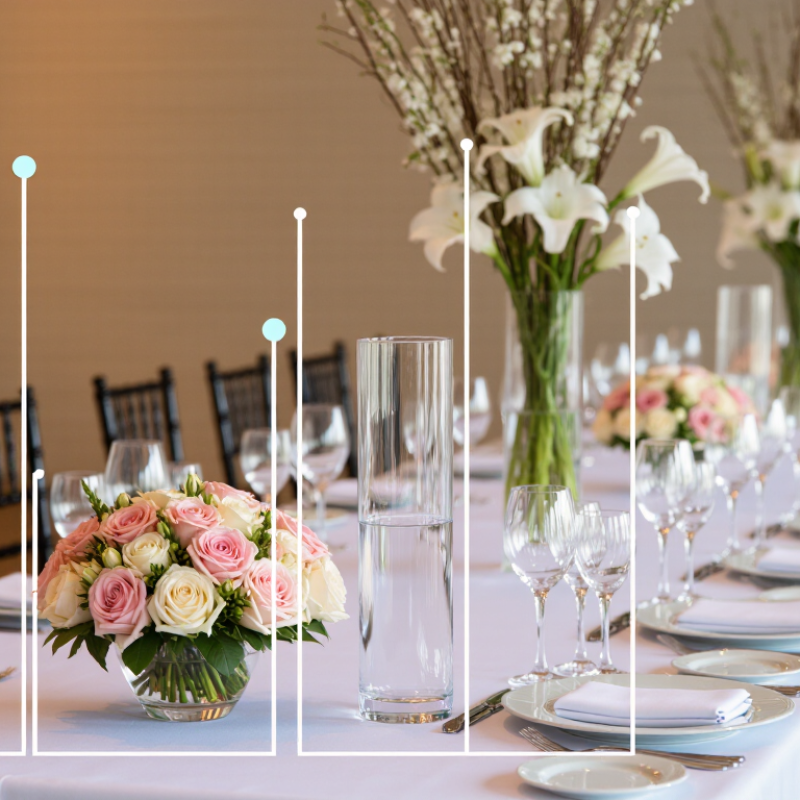
Understanding How Vase Height Affects Table Visibility
The right vase height depends on seated sightlines, not the table’s visual drama. A centerpiece should decorate conversation, never interrupt it.
The ANSUR II anthropometric report places seated eye height near 75–83 centimeters for many adult users. A low vase around 20–30 centimeters usually stays below that sightline. This height works well for dinner tables, where guests need to see faces, plates, and serving dishes. In my event setup experience, narrow vessels also improve visibility when tables are crowded. Small details matter.
BIFMA’s G1 ergonomic guidance recommends designing for a broad user range, including shorter and taller adults. That makes a single “perfect” vase height unrealistic. For mixed seating, keep the arrangement below 30 centimeters, or raise it above 60 centimeters with a slim, stable base. The gap between these ranges is risky. It can block eye contact. For a long banquet table, test the centerpiece from a seated position before placing every vase. Walk around the table, too. A height that works from one chair may fail from another. I once trusted a showroom display and missed that the flowers spread sideways, not upward. That was a useful mistake. The vase was technically low, yet the foliage still covered nearby faces. Research can guide the measurement, but real furniture, lighting, and flower shape require a final sightline check.
Choosing Vase Height for Different Table Shapes and Sizes
In practical table styling, vase height should follow the table’s shape, width, and purpose. For a standard dining table, a 10-to-14-inch vase usually keeps seated guests visible. A taller vase can work with a narrow base and an open upper design. I once used a wide 16-inch centerpiece on a small round table. It looked attractive standing up, yet blocked conversation when guests sat down. That mistake still guides my measurements.
On round tables, one centered vase creates a calm focal point. Choose a vase about one-third of the table’s diameter, then keep the arrangement airy. Square tables often suit one compact vase or four small vessels near the corners. Rectangular tables need scale: use a low, elongated arrangement, or repeat two or three slim vases along the center. Leave at least 12 inches between the centerpiece and each place setting. Large tables can handle more height, but visual weight matters more than height alone.
Tips:
Measure from the tabletop to the tallest flower, not just the vase. Sit in a chair before deciding. Check the view from both ends of a rectangular table. For formal meals, keep tall designs above eye level only when the stems are thin and the base is stable. Test the arrangement with real plates and glasses. My own rule is flexible; lighting, flower density, and guest height can change the result.
Matching Centerpiece Height to the Event and Dining Style
The right vase height depends less on fashion than on how guests use the table.
For a seated dinner, keep the floral mass below 12 inches, or raise it above 22 inches. This preserves eye contact across a 30-inch-wide table. Measure the arrangement, not only the vase. Flowers and foliage often add several inches.
I learned this after a low vase looked safe, yet broad leaves still blocked conversation. That detail matters.
A formal wedding dinner usually benefits from tall, narrow arrangements.
Place them in slim vessels, and keep the base stable near the table center. Height can create drama without taking up valuable plate space.
For a family-style meal, choose lower pieces. Shared serving bowls need clear sightlines and easy access.
A 10-inch vase may work better than a 24-inch design when dishes travel constantly. Test it with real plates, glasses, and serving spoons.
Empty tables are misleading.
Cocktail receptions allow more freedom because guests stand and move.
Still, avoid fragile, top-heavy displays near busy edges. For brunch or casual dining, varied small vases can feel relaxed and practical. Use three or five pieces with different heights, but keep their combined footprint modest.
Candlelight can change the perceived scale.
Check the centerpiece from a seated guest’s eye level and from a standing guest’s path. If conversation feels interrupted, reduce the height.
A beautiful arrangement is not automatically a useful one.
Selecting Flowers and Foliage for Balanced Vase Proportions
What Is the Right Height for a Table Centerpiece Vase?
Selecting flowers and foliage starts with proportion, not the vase. For a seated dinner, keep the arrangement around 12 to 14 inches high. Designs below 10 inches also work well. Tall arrangements can succeed when stems remain above eye level. The American Institute of Floral Designers emphasizes scale, rhythm, and visual balance. I trust those principles, although real tables are rarely perfectly measured.
Choose flowers with different visual roles. Use three to five strong focal blooms, then add smaller flowers to soften gaps. Foliage can extend about one-third beyond the flower mass. It should frame the blooms, not hide them. Airy stems create movement, while broad leaves make a narrow vase feel heavier. The USDA’s 2023 Floriculture Crops Summary valued U.S. floriculture sales at approximately 6.7 billion dollars. That wide supply still varies by season, region, and stem length. My first arrangement often looks too dense. Removing several leaves usually improves its shape.
Tips: Match vase width with the table setting. Leave about 18 inches between arrangements for shared dishes. The Knot’s 2024 Real Weddings Study reported an average floral and décor expense of about 2,800 dollars. Reusing sturdy foliage can control waste and cost. Test the centerpiece from a seated eye level. Rotate it slowly. One side may need editing.
What Is the Right Height for a Table Centerpiece Vase?
Selecting flowers and foliage for balanced vase proportions starts with the table type. For seated dining, keep the arrangement low enough to preserve eye-level conversation; taller designs work better on standing, console, or buffet tables.
How to use this chart: The values show practical total arrangement heights, including the vase and plant material. A low dining centerpiece is generally 10–14 inches tall, while taller arrangements are more suitable where guests are standing or no direct conversation sightline is needed. Keep the vase visually stable by choosing flowers and foliage whose combined height is about 1.5 times the vase height.
Adjusting Vase Height for Guest Comfort and Table Functionality
What Is the Right Height for a Table Centerpiece Vase?
A vase should support conversation, not interrupt it. For most seated dining tables, keep the arrangement below eye level, usually 10 to 14 inches high. Measure from the tabletop to the tallest flower, not just the vase. A compact vase around 8 inches often leaves enough space for plates, serving dishes, and reaching hands. It also creates a calmer view across the table.
Table function can change the ideal height. For a small dinner, a low, rounded arrangement keeps every guest connected. On a buffet table, a taller vase may work because guests stand while choosing food. Long, narrow designs can also rise higher, but they should remain visually open. Guests need to see through or around them. Avoid placing dense flowers at face level. That mistake becomes obvious when someone leans forward for a conversation.
Test the centerpiece with real chairs, plates, and glasses before the event. Sit at opposite ends and check the sightline. Then reach across the table. Does the vase block a serving bowl? Move it. Rules help, but they are not perfect. A 12-inch arrangement may feel comfortable on one table and crowded on another. Room lighting, guest height, and table width all matter. I have found that a slightly lower vase usually serves guests better than an impressive but intrusive display. Leave room for movement.
What Is the Right Height for a Table Centerpiece Vase? - Adjusting Vase Height for Guest Comfort and Table Functionality
| Table Setting |
Typical Table Height |
Recommended Vase Height |
Preferred Arrangement Height |
Suggested Table Clearance |
Comfort and Functionality Guidance |
| Standard dining table |
28–30 in (71–76 cm) |
8–14 in (20–36 cm) |
Up to 18 in (46 cm) |
18–24 in (46–61 cm) between settings |
A low arrangement keeps faces visible and leaves room for plates, glasses, and serving dishes. |
| Formal seated dinner |
28–30 in (71–76 cm) |
6–12 in (15–30 cm) |
No higher than 18 in (46 cm) |
Allow at least 24 in (61 cm) per guest |
Keep the centerpiece below eye level so guests can maintain direct eye contact across the table. |
| Buffet or serving table |
28–36 in (71–91 cm) |
18–24 in (46–61 cm) |
Up to 30 in (76 cm) |
Keep 4–6 in (10–15 cm) from the table edge |
Greater height can create a focal point because guests usually stand or approach from one side. |
| Cocktail-height table |
40–42 in (102–107 cm) |
12–20 in (30–51 cm) |
Up to 24 in (61 cm) |
Leave usable space for drinks and small plates |
Use a stable, narrow vase so the arrangement does not interfere with standing guests or elbow space. |
| Long rectangular table |
28–30 in (71–76 cm) |
8–14 in (20–36 cm) per vase |
Up to 18 in (46 cm) |
Keep 12–18 in (30–46 cm) between arrangements |
Several low vases distribute visual weight evenly without blocking sightlines along the table. |
| Round dining table |
28–30 in (71–76 cm) |
8–16 in (20–41 cm) |
Up to 18 in (46 cm) |
Reserve at least 18 in (46 cm) per place setting |
A single compact vase usually works best; avoid oversized bases that reduce usable tabletop space. |
| Small table or café table |
28–30 in (71–76 cm) |
4–8 in (10–20 cm) |
Up to 12 in (30 cm) |
Keep at least 10–12 in (25–30 cm) clear for dining items |
Choose a short, narrow vase to preserve dining and conversation space. |
| Outdoor dining table |
28–30 in (71–76 cm) |
6–12 in (15–30 cm) |
Up to 18 in (46 cm) |
Leave extra space around the base for movement and wind protection |
Use a weighted, wide-base vase and avoid tall, top-heavy branches in exposed areas. |
Practical rule: For seated meals, keep the total centerpiece arrangement at or below approximately 18 in (46 cm) when clear conversation is important. If using a taller arrangement, keep it slender and position it where it will not obstruct guests, serving areas, or table lighting.
Conclusion
Choosing the right centerpiece vase height can transform a table’s appearance while keeping conversations and dining comfortable. To understand how to choose the right height for a table centerpiece vase, consider the table’s shape, size, and purpose. Round tables often suit a balanced, centrally placed vase, while long tables may benefit from several lower arrangements or carefully spaced displays. The vase should add visual interest without blocking guests’ views or making the table feel crowded.
The event and dining style also influence the ideal height. Formal dinners usually benefit from elegant arrangements that maintain clear sightlines, while casual gatherings allow more creative variation. Flowers and foliage should be selected in proportion to the vase, with heavier blooms supported by a stable base and delicate stems paired with lighter designs. Always leave enough room for plates, serving dishes, and movement, adjusting the height and arrangement whenever needed to preserve both beauty and table functionality.

 Anzi Decor