Learning how to incorporate ceramic wall art in a bedroom begins with more than choosing a beautiful object. The wall, bed, lighting, and surrounding textures must share a calm visual rhythm. Ceramic pieces can add handmade warmth, subtle shadows, and a grounded connection to natural materials. They also reveal small irregularities, which can make a bedroom feel personal rather than manufactured.
Interior designer Kelly Wearstler has said, “I believe that every room should have a conversation piece.” Ceramic wall art can provide that quiet conversation. A sculptural clay panel above a headboard may become the room’s focal point, while three smaller pieces can create a softer gallery effect. Consider matte white ceramics against a muted sage wall, or textured terracotta beside linen bedding. Leave enough empty space around each piece. Crowded arrangements often weaken the artwork’s presence.
Safety and proportion matter too. Mount heavier ceramics with suitable wall anchors, especially above the bed. Check the surface regularly for movement or stress. A piece may look impressive online but feel too dominant in person. That is worth admitting. Good bedroom design often requires adjustment after living with the arrangement for several nights. Notice how morning light changes the glaze, and whether the art feels restful before sleep. The best placement may not be perfectly symmetrical. It should feel intentional, comfortable, and honest to the room.
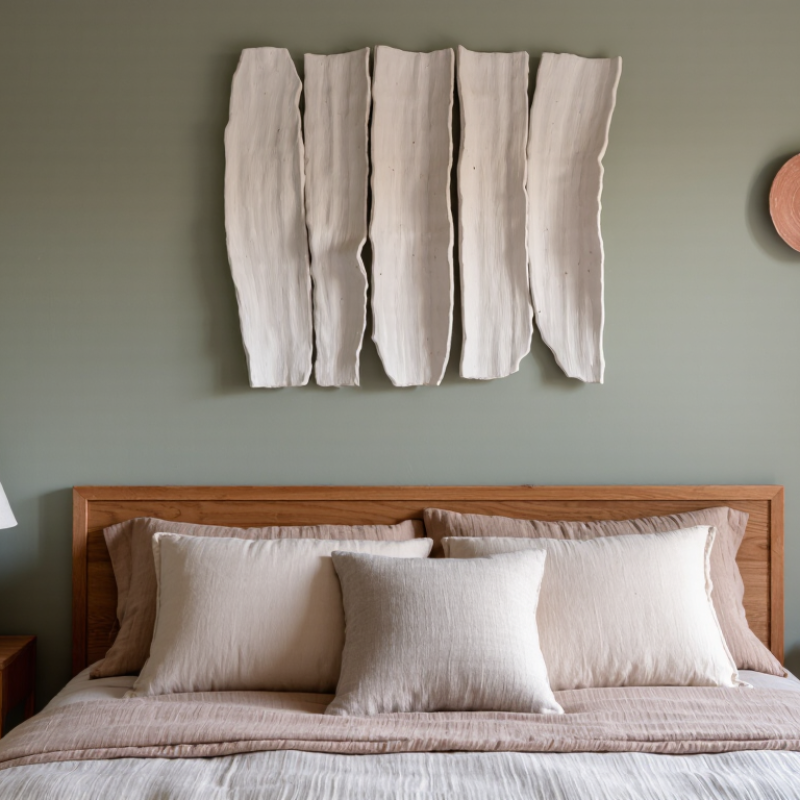
Ceramic wall art adds depth through clay’s uneven surface, soft shadows, and subtle color variation. In a bedroom, it can create a calmer focal point than glossy prints or metal decoration.
The National Sleep Foundation’s Bedroom Poll found that 78% of adults consider clean sheets important for better sleep.
This supports a restrained visual approach. Choose one broad ceramic panel above the headboard, rather than covering every wall. Keep its colors close to the bedding, but vary the texture. Matte clay beside linen can feel quiet and tactile.
Placement also requires practical judgment. Leave enough clearance above the headboard, and use a mounting system rated for the artwork’s weight. Avoid positioning pieces where they could fall during sleep.
The U.S. Environmental Protection Agency recommends indoor humidity between 30% and 50%. This range helps protect both comfort and moisture-sensitive furnishings.
Ceramic is durable, but porous unglazed clay may absorb condensation in poorly ventilated rooms. A sealed finish is safer near bathrooms. It can still look slightly imperfect. That is part of its appeal, though uneven edges may appear careless beside highly tailored furniture. Test the piece in daylight first. Warm bulbs can make cream ceramics look yellow, while cool bulbs may expose every surface flaw.
Choosing ceramic wall art starts with the bedroom’s visual language. In my experience, a calm room benefits from matte surfaces, softened edges, and restrained colors. A glossy, heavily patterned tile may compete with linen bedding and warm wood. For a modern bedroom, try geometric plaques in white, charcoal, or muted clay. Traditional rooms often suit hand-shaped reliefs with gentle botanical or landscape details. Texture matters. Hold a paper color sample beside the ceramic before purchasing. Morning and evening light can change its apparent tone.
Scale deserves equal attention. Above a narrow nightstand, one piece should usually be slightly narrower than the furniture below it. On a wide wall, arrange three related pieces with uneven spacing rather than a rigid row. That small irregularity can feel more collected. Use the glaze as a bridge: blue-gray ceramic can echo a blanket, while terracotta can repeat a wooden accent. Check the mounting hardware and wall type before hanging; ceramic is heavier than it looks. A rated hanger and secure wall fixing are practical safeguards. I once chose a beautiful piece that felt too bright after sunset. It needed softer lighting, not replacement. Leave breathing room around the art.
Ceramic wall art can make a bedroom feel grounded, but placement should follow the room’s visual weight. Hang one piece about 15–25 centimeters above the headboard. This keeps the composition connected without making the bed feel crowded. For a large headboard, choose art reaching roughly two-thirds of its width. A small piece may disappear. I learned this after placing a delicate ceramic tile above a wide bed; it looked strangely unfinished.
Scale also depends on viewing distance. A 60-centimeter artwork usually needs open wall space, not a narrow gap beside a wardrobe. Leave breathing room around irregular edges, especially when the ceramic has raised texture or glossy glaze.
Use color balance rather than perfect symmetry. Repeat one ceramic tone in a lamp, throw, or curtain, then allow one quiet contrast. A pair of smaller plaques can balance a tall window, while a single vertical piece can correct a low ceiling.
Keep the artwork secure and inspect its mounting hardware regularly. The 2024 Houzz & Home Study shows that homeowners continue investing in personalized home improvements, yet personalization can become clutter. Leave one wall partly empty. It may feel incomplete at first. That hesitation is worth examining.
Ceramic wall art can weigh more than it appears. Before drilling, record its weight and inspect the hanging hardware for cracks, rust, or loose screws. The U.S. Consumer Product Safety Commission reported an average of about 22,000 annual injuries from furniture and television tip-overs between 2018 and 2020. Ceramic art is different, but the lesson remains relevant: gravity punishes weak fixings. Use hardware rated well above the artwork’s weight. Select anchors for plasterboard, masonry, or timber studs, not generic plugs. A stud finder can miss hidden pipes, so check the drilling area carefully.
For a bedroom, I prefer two fixing points, such as a secure D-ring pair or a properly rated cleat. They reduce twisting when a door closes or a bed frame vibrates. Leave a small gap between the ceramic and wall, using soft bumpers to prevent scratching and impact noise. Above a bed, add a secondary safety wire or retention strap. The CPSC’s Anchor It guidance also supports securing wall-mounted objects and checking connections regularly. Inspect the mount after one week, then every few months. I still recheck mine after cleaning because dust can hide movement. That step feels excessive, but a slightly loose screw is an early warning, not a decoration detail. A professional installer should confirm wall condition before trusting any load rating.
Ceramic wall art can bring quiet texture to a bedroom, but its beauty depends on steady care. In my experience, dust gathers fastest along raised edges and carved surfaces. A soft, dry microfiber cloth removes it without scratching the glaze. Work gently.
Clean the piece every two or three weeks. Hold the cloth lightly, and avoid pressing against thin corners. For stubborn marks, dampen a cotton swab with clean water and test a hidden area first. Never soak the ceramic or spray cleaner directly onto it. Moisture may enter tiny cracks, especially on handmade surfaces. Dry the area immediately with a lint-free cloth.
Bedroom humidity also deserves attention. Keep ceramic art away from leaking windows, strong heaters, and bathrooms with poor ventilation. Sudden temperature changes can stress older or porous clay. Check the wall fitting every few months, particularly after moving furniture or noticing slight movement. A secure hook and suitable wall anchor reduce unnecessary vibration. Do not rely only on appearance; a mount can loosen before the artwork visibly shifts. I once ignored a small gap behind a wall piece and later found dust collecting around the bracket. That was avoidable. If a chip, crack, or loose mount appears, stop cleaning and ask a qualified conservator or installer for advice. Regular inspection may feel excessive, but it protects both the artwork and the people sleeping nearby.
Maintaining ceramic wall art regularly helps preserve its surface, glaze, and mounting safety. The chart shows a practical care schedule for long-term beauty.
Dust the artwork gently each week with a soft, dry cloth. Inspect the mounting hardware monthly, use a slightly damp cloth for surface cleaning every three months, and perform a more thorough condition check twice a year. Avoid abrasive cleaners, excessive moisture, and direct contact with sharp objects.
Its uneven clay surface creates soft shadows and quiet depth. It feels calmer than glossy decoration.
Hang one piece about 15–25 centimeters above the headboard. Keep it connected to the bed, not crowded.
For a large headboard, choose artwork reaching about two-thirds of its width. Small pieces may disappear.
Yes. Arrange three related pieces with uneven spacing. Perfect alignment may feel stiff.
Repeat one ceramic tone in a lamp, blanket, or curtain. Blue-gray can echo bedding, while terracotta can warm wood.
Matte clay, softened edges, and restrained colors usually work well. Highly glossy patterns may compete with linen.
Check the wall type, hardware, and artwork weight. Use a secure fixing system rated for the piece.
It can be, if mounted securely and positioned carefully. Avoid hanging unstable pieces over sleeping areas.
Warm bulbs may make cream ceramic look yellow. Cool bulbs can reveal every surface flaw.
Yes. Empty space helps irregular edges and raised textures breathe. It may feel unfinished at first, but that feeling deserves thought.
Learning how to incorporate ceramic wall art in a bedroom can add warmth, texture, and personality without overwhelming the space. Ceramic pieces can serve as calming focal points, subtle decorative accents, or meaningful expressions of personal taste. Begin by considering the bedroom’s existing style, colors, materials, and mood, then choose artwork with shapes, finishes, and tones that complement the overall design. Simple forms may suit a modern room, while handcrafted textures can enhance a more relaxed or natural atmosphere.
Placement, scale, and visual balance are equally important. Position ceramic art where it can be appreciated, such as above a headboard, dresser, or reading area, while leaving enough surrounding space for the piece to stand out. Consider the wall’s size and the relationship between the artwork and nearby furniture. During installation, use suitable hardware, check the wall structure, and secure heavier pieces carefully to reduce the risk of damage. Regularly dust the surface gently, avoid harsh cleaners, and inspect the mounting from time to time to preserve its beauty and safety.

Anzi Decor