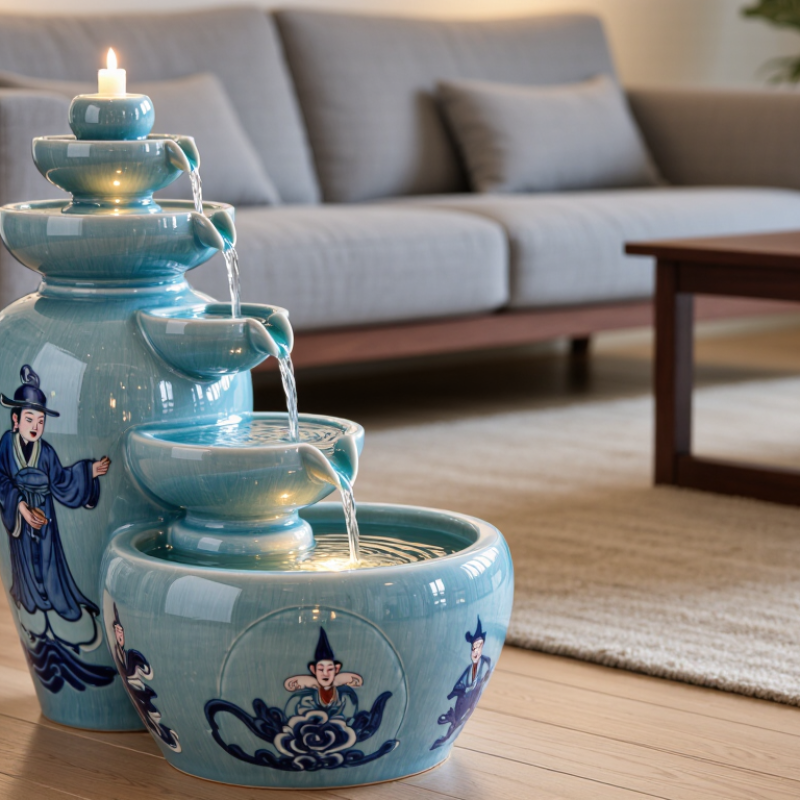
Why China Top Ceramic Fountains Improve Home Atmosphere? This question deserves more than a decorative answer. A ceramic indoor fountain can add movement, gentle sound, and a visible connection with water. Its glazed surface may reflect warm lighting, while its rounded form softens hard furniture lines. In a quiet living room, the sound can make an empty corner feel lived in.
Environmental psychologist Roger Ulrich’s research on natural views supports the value of calming visual elements. His widely cited perspective is simple: “Nature can help reduce stress and support recovery.” That idea helps explain why ceramic water features attract attention in homes. They do not create peace by themselves. Placement, water volume, lighting, and personal preference still matter.
This is the practical starting point for understanding why ceramic indoor fountains improve home atmosphere. A small tabletop model may suit a study, where soft water noise can mask traffic. A larger Chinese ceramic fountain may become a cultural focal point near an entryway. Experienced designers also check splash control, pump noise, cleaning access, and room humidity. These details are easy to ignore.
The argument is not flawless. Some people find running water distracting, and neglected fountains can develop odors or mineral marks. Regular cleaning remains essential. A beautiful fountain can still feel wrong in a crowded room. This outline will examine ceramic quality, sound, visual balance, maintenance, and emotional comfort. It will also compare decorative appeal with daily usability, helping homeowners make a reliable and realistic choice.
What Makes China a Leading Source of Ceramic Fountains
Why China Top Ceramic Fountains Improve Home Atmosphere?
China has become a leading source of ceramic fountains because its pottery tradition combines skill, variety, and practical production. Experienced workshops can shape textured leaves, smooth bowls, and detailed animal forms with consistent quality. Many producers also understand modern interior needs, including compact sizes, quiet pumps, and water-resistant finishes. These details matter in living rooms, entryways, and small patios.
Ceramic creates a calm visual focus. Its cool surface, gentle reflections, and flowing water can soften hard furniture lines. In my experience, a small fountain near a reading chair feels more natural than a large model in a crowded room. However, not every design improves the atmosphere. Glossy finishes may look too cold, while weak pumps can create disappointing noise. Quality testing, stable packaging, and clear care instructions are important signs of a reliable supplier. Some details still need closer checking, especially glaze durability and replacement parts.
Tips: Choose a size that leaves walking space. Check pump noise before regular use. Place the fountain on a level, waterproof surface. Clean mineral deposits gently. Soft lighting helps ceramic texture appear warmer. A fountain should support the room, not dominate it.
Why China Top Ceramic Fountains Improve Home Atmosphere? - What Makes China a Leading Source of Ceramic Fountains
| Evaluation Dimension |
Relevant Data or Fact |
Home Atmosphere Benefit |
| Material Durability |
Ceramic fountains are commonly fired at approximately 1,100–1,300°C, depending on the clay body and glaze system. |
A properly fired surface is hard, stable, and suitable for long-term indoor decorative use. |
| Humidity and Water Exposure |
Glazed ceramic has a low-porosity surface that is easier to wipe clean than unglazed porous materials. |
The fountain can add a fresh visual element while routine cleaning helps maintain a pleasant indoor environment. |
| Sound Profile |
A small recirculating pump produces continuous water movement; sound level varies with pump design, water depth, and flow rate. |
Gentle water sounds can help mask intermittent background noise and create a calmer sensory setting. |
| Visual Design Flexibility |
Ceramic supports molded forms, relief patterns, hand-applied decoration, and a broad range of glaze colors. |
Different shapes and finishes can complement minimalist, traditional, natural, or contemporary interiors. |
| Heat and Color Stability |
Ceramic is an inorganic material and does not soften or melt at normal indoor temperatures. |
The decorative structure remains visually stable in ordinary household conditions when used according to product instructions. |
| Manufacturing Infrastructure |
China has long-established ceramic-producing regions with access to clay processing, glazing, kiln firing, molding, and finishing services. |
A mature supply chain supports broad design choices, repeat production, and coordinated component sourcing. |
| Customization Capability |
Common customization options include dimensions, surface texture, glaze color, relief pattern, water outlet layout, and packaging format. |
Homeowners and interior designers can select a fountain that matches room scale and existing décor. |
| Production Scale |
Industrial ceramic production can combine manual finishing with standardized molding and kiln processes for different order volumes. |
This balance allows decorative detail while supporting consistent dimensions and quality checks. |
| Maintenance Requirements |
Regularly removing mineral deposits, replacing or cleaning pump components, and refreshing the water helps maintain fountain performance. |
A clean fountain provides a more attractive appearance and reduces unpleasant odors caused by stagnant water. |
| Responsible Use Considerations |
A fountain increases local humidity only near the device; it does not replace ventilation or a household humidifier. |
Using the fountain in a ventilated area and following electrical and water-safety instructions supports a comfortable indoor atmosphere. |
Note: Actual performance depends on the ceramic body, glaze quality, pump specifications, room conditions, and maintenance frequency.
How Ceramic Fountains Enhance Indoor and Outdoor Atmospheres
Ceramic fountains can reshape indoor and outdoor atmospheres through sound, movement, and texture. In an entryway, gentle water noise can soften traffic sounds and create a calmer welcome. A hand-finished ceramic basin also adds color, especially beside wood, stone, or neutral walls. Glazed surfaces reflect small highlights from nearby lamps. The effect feels warm, not overly mechanical.
Outdoors, a ceramic fountain can anchor a patio, balcony, or quiet garden corner. Place it near seating, where visitors can hear the water without raising their voices. Choose a stable base and check the pump regularly. Mineral deposits may dull the glaze, so wipe the basin with a soft cloth and clean water. I once placed a fountain too close to a doorway. Splashing made the floor slippery. That mistake changed my approach.
Tips: Test the sound before final placement. A low, steady flow usually feels more relaxing than a forceful stream. Keep electrical connections protected and follow local safety guidance. Measure the space carefully, because a large fountain can make a small room feel crowded. Add plants nearby, but leave enough access for cleaning. Ceramic is durable, yet it can chip or crack under harsh impact or freezing conditions. It is not decoration alone. It needs thoughtful care.
How to Choose the Right Ceramic Fountain for Your Space
Choosing the right ceramic fountain begins with the room, not the product. Measure the available floor area and leave clear space around the basin. A fountain should support the atmosphere, not dominate it. For a small study, a 30–45 centimeter model usually creates gentle movement without excessive sound. In a larger living room, a taller design can provide a stronger visual anchor.
Check the ceramic body carefully. Look for an even glaze, stable footing, and a smooth inner basin. Hairline cracks may worsen after repeated filling and drying. The pump also matters. Choose an adjustable pump with a low operating noise level. The U.S. Environmental Protection Agency’s WaterSense program reports that household leaks can waste nearly 10,000 gallons of water yearly. A recirculating fountain uses far less, but evaporation still requires regular refilling. Use distilled water when mineral deposits become visible. It is a small improvement.
Placement changes the experience. Keep the fountain away from direct sunlight, heating vents, and delicate wooden surfaces. Leave access for cleaning and pump removal. The American Society of Landscape Architects consistently identifies water elements as part of restorative outdoor design, yet indoor results depend on scale and maintenance. Bigger is not always better. A quiet trickle may suit a bedroom, while a stronger flow works near conversation areas. My own preference is a slightly imperfect handmade surface. It feels warmer. However, uneven glazing can collect dust, so beauty must not replace practical inspection.
Placement and Maintenance Tips for Long-Term Enjoyment
Why China Top Ceramic Fountains Improve Home Atmosphere?
Placement and maintenance determine whether a ceramic fountain remains calming or becomes a moisture problem.
Place it on a level, waterproof tray, away from curtains, books, sockets, and direct sunlight. A quiet corner near the entryway or living room often works well. Keep it shaded. Sunlight encourages algae growth and can heat the water.
The U.S. Environmental Protection Agency recommends indoor relative humidity between 30% and 50%.
Therefore, avoid placing a fountain beside a humidifier, bedroom wall, or poorly ventilated corner. A small hygrometer can reveal conditions that feel normal but are too damp. I once positioned a fountain against a wooden cabinet. The sound was pleasant, but tiny splashes left dull marks. That was careless.
Clean the basin and pump weekly, especially in dusty homes. Replace the water every few days, and remove mineral scale with diluted white vinegar when the surface becomes cloudy. Rinse every part thoroughly afterward.
The U.S. EPA’s moisture-control guidance stresses prompt drying because persistent dampness can support mold growth. Never treat a fountain as an air purifier; its main value is visual movement and gentle sound.
Check the cord, pump, and ceramic surface during each cleaning. Stop using the unit if cracks, leaks, or exposed wiring appear.
A fountain should feel effortless, not demanding. Yet maintenance is the price of that calm.
Conclusion
China has become a leading source of ceramic fountains because of its long history of pottery, skilled craftsmanship, and ability to combine traditional techniques with modern design. High-quality clay, durable glazes, careful hand-finishing, and reliable water circulation systems help create fountains that are both attractive and practical. These features allow ceramic fountains to suit many styles, from simple indoor settings to decorative outdoor spaces.
The gentle sound and movement of water can make a room feel calmer, fresher, and more inviting, while outdoor fountains can enhance gardens, patios, and entrances. This explains why ceramic indoor fountains improve home atmosphere by adding visual interest, soft natural sound, and a relaxing focal point. When choosing a fountain, consider its size, shape, color, water capacity, power requirements, and relationship to the surrounding décor. For long-term enjoyment, place it on a stable, level surface away from extreme heat, clean the basin regularly, remove mineral buildup, maintain the pump, and replace the water as needed.

 Anzi Decor